2026 Best Oven Baking Trays for Global Buyers

Time:2026-10-26 Author:Sophia
0%

Choosing the right Oven Baking Trays in 2026 requires more than comparing prices or shiny product photos. Global buyers need trays that perform consistently across kitchens, climates, ovens, and production volumes. A tray used in a humid coastal bakery may face different problems from one used in a dry, high-altitude facility.

Rose Levy Beranbaum, respected baking author and recipe developer, has stated, “The pan is an integral part of the recipe.” That observation remains practical. Tray material, thickness, surface finish, rim design, and heat distribution can change browning, release, and baking time. A thin steel tray may heat quickly but warp after repeated thermal cycling. A heavier aluminum tray can distribute heat more evenly, though it may increase shipping weight and cost. Small details matter.

This guide evaluates Oven Baking Trays for home users, professional bakeries, catering teams, and international distributors. It considers aluminum, stainless steel, carbon steel, silicone-coated, and non-stick options. We examine temperature performance, durability, cleaning effort, food-contact suitability, packaging, and supplier reliability. Product claims should still be verified through samples and technical documents. No tray wins everywhere.

Buyers should test a tray with real recipes, not only laboratory numbers. Watch the corners after several heating cycles. Check whether cookies brown evenly from edge to center. Inspect the coating after careful washing. Some recommendations may change after practical testing, and that is acceptable. Reliable purchasing often begins with honest uncertainty, clear specifications, and repeatable results.
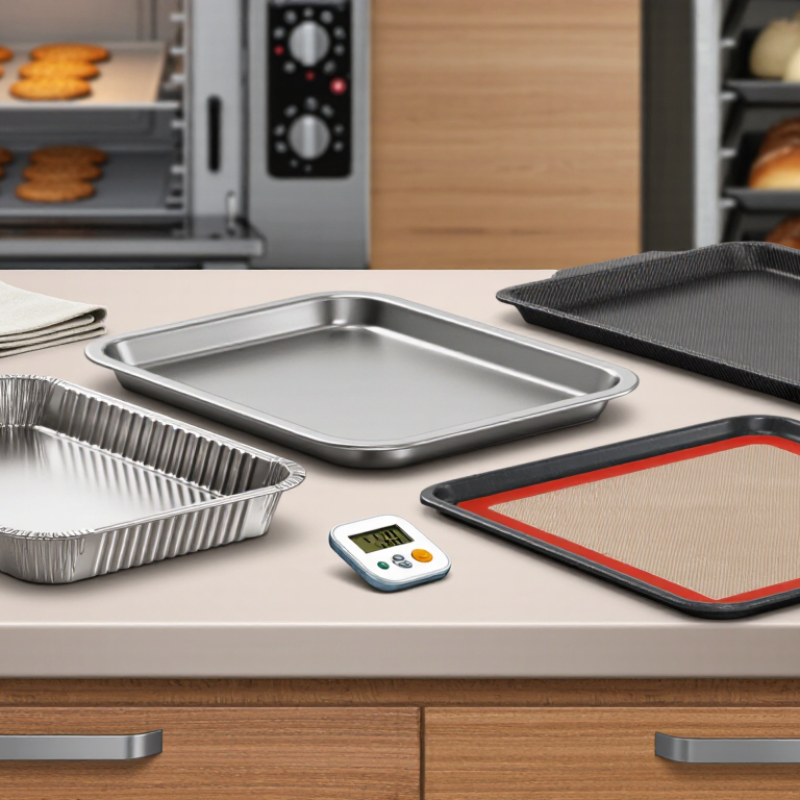
2026 Best Oven Baking Trays for Global Buyers

Types of Oven Baking Trays for Different Baking Needs

2026 Best Oven Baking Trays for Global Buyers

Oven baking trays serve different purposes, so one shape rarely suits every kitchen. A flat aluminum tray heats quickly and supports cookies, pastries, and roasted vegetables. Its light weight helps busy bakeries move several trays safely. Stainless steel trays resist rust and suit acidic foods, although they may brown food less evenly. Carbon steel offers stronger heat retention for bread and pizza. It needs careful drying after washing.

Nonstick trays release delicate cakes easily and reduce cleanup. However, scratched coatings may perform poorly, so use silicone or wooden tools. Glass and ceramic dishes hold heat well for casseroles and baked pasta. They are heavier and may react badly to sudden temperature changes. Perforated trays improve airflow beneath bread rolls and crisp frozen snacks. Deep-sided trays work better for lasagna, fruit cobblers, and foods with liquid.

Tips: Check the tray’s dimensions against your oven rack before ordering. Measure internal width, depth, and clearance near the door. Confirm the stated temperature range and food-contact information for your market. I prefer rolled edges because they feel safer when carrying hot food. Still, I once chose a tray that warped slightly under high heat. That mistake reminded me to compare thickness, not only appearance. Leave space between trays for air movement. Handwashing may also extend the life of coated surfaces.

Key Materials and Coatings Used in Baking Tray Manufacturing

For global buyers, baking tray performance begins with the base material. Aluminum heats quickly and supports even browning, especially for biscuits and thin pastries. It is lightweight, but softer grades may dent during shipping. Aluminized steel combines a steel core with an aluminum surface. This structure improves strength, heat distribution, and corrosion resistance. Carbon steel offers excellent durability and strong heat retention. However, it can rust when moisture remains on the surface.

Stainless steel resists corrosion and cleaning chemicals. It is hygienic, but it transfers heat less efficiently than aluminum. Tray thickness also matters. Very thin sheets may warp in high-temperature ovens. Thicker sheets feel more stable, though they increase weight and freight costs. In production checks, I look for flat corners, consistent gauge, and clean rolled edges.

Coatings affect release, cleaning, and service life. PTFE coatings usually provide smooth release and need careful handling to avoid scratches. Silicone coatings offer flexibility and useful release performance, but their temperature limits must match the recipe. Ceramic coatings can resist staining, although surface damage may reduce their benefits. Anodized aluminum creates a harder surface without adding a separate release layer. I once overlooked a coating’s abrasion test, and early wear appeared near the tray edges. Buyers should request coating thickness, temperature ratings, food-contact documentation, and repeated-wash test results. Supplier claims alone are not enough.

How to Choose the Right Baking Tray Size, Shape, and Thickness

Choosing the right baking tray starts with your oven, not the recipe. Measure the rack width, depth, and door clearance before buying. Leave about two centimeters around the tray for better airflow. A common 30 x 40 centimeter tray may not fit smaller ovens.

Rectangle trays suit cookies, vegetables, and family meals. Square trays work well for brownies and compact cakes. Round trays are useful for layered desserts, but they waste space in rectangular ovens. A shallow rim helps release steam from roasted food. A taller rim contains sauces and prevents spills.

Thickness affects heat control and durability. Thin trays heat quickly but may warp or darken food unevenly. A medium-gauge tray, often around 0.8 to 1.2 millimeters, offers a practical balance for home baking. Thicker steel holds heat longer, while aluminum usually responds faster to temperature changes. Material changes the result.

Check measurements in both centimeters and inches. This reduces mistakes when comparing international listings. I once bought a tray by its advertised length and ignored the handles. It did not fit. That was an avoidable lesson.

Look for flat bases, smooth edges, and secure rims. Avoid trays that flex sharply when lifted. If you bake delicate pastries, choose a lighter surface color for gentler browning. For bread or heavy roasts, stronger construction is safer and more stable. Some guidance remains imperfect because oven temperatures vary between households. Use the tray with a test bake.

Safety, Durability, and Compatibility Features for Global Buyers

Choosing the best oven baking tray for global buyers requires more than checking its size. Safety begins with food-contact materials, stable construction, and clear temperature guidance. Look for trays made from verified metal, glass, or coated materials. Request compliance documents when importing across markets. Requirements can differ by country.

Durability depends on thickness, edge strength, and resistance to warping. A tray that bends at 220°C may spill hot oil or unevenly baked food. Reinforced rims improve handling, especially with heavy roasts. Smooth surfaces also reduce trapped residue. However, no coating lasts forever. Scratches from metal tools can shorten its useful life.

Compatibility needs careful measurement. Check the internal oven width, rack spacing, and airflow around the tray. A large tray may fit the door but block circulation inside. Not ideal. Handles can help, yet they may reduce usable baking space. I also recommend checking whether the tray tolerates dishwashers, convection heat, and repeated temperature changes. Care instructions matter as much as the material.

A realistic buying decision balances safety, lifespan, and local use. A thick tray can be reliable but unnecessarily heavy for small household ovens. A lightweight model may be easier to lift but less stable. This trade-off deserves attention. Global buyers should compare dimensions, temperature limits, cleaning methods, and available technical documentation before ordering.

2026 Best Oven Baking Trays for Global Buyers - Safety, Durability, and Compatibility Features for Global Buyers

Comparison criteria are based on commonly available baking-tray specifications. Buyers should confirm the exact product specification, oven dimensions, and applicable food-contact requirements before purchase.
Tray Category Typical Material Common Size Range Typical Temperature Range Safety Features Durability Profile Compatibility Notes Recommended Uses
Aluminum Sheet Pan Bare or anodized aluminum Approximately 260 × 180 mm to 660 × 460 mm Usually about 230–260°C, subject to product instructions Food-contact-grade surface; rolled edges can reduce sharp corners Lightweight, good heat response; may warp if overheated or heavily distorted Fits many conventional ovens; verify rack width and depth Cookies, pastries, roasted vegetables, and sheet-pan meals
Carbon-Steel Baking Tray Carbon steel with protective finish or seasoning Approximately 300 × 220 mm to 450 × 330 mm Often about 230–280°C, depending on coating and care instructions Use only coatings specified for food contact; avoid damaged surfaces Rigid and highly heat responsive; requires drying and rust prevention when uncoated Suitable for standard ovens; magnetic properties do not guarantee induction use Bread, pizza, biscuits, and crisp roasted foods
Stainless-Steel Tray Food-contact stainless steel, commonly 18/8 or 18/10 grades Approximately 250 × 180 mm to 600 × 400 mm Commonly about 220–260°C, depending on construction Non-coated surface; check declared food-contact compliance for the destination market Excellent corrosion resistance and long service life; may distribute heat less evenly than aluminum Works in conventional and fan ovens when dimensions are suitable Roasting, marinades, savory baking, and commercial kitchen use
Nonstick-Coated Tray Aluminum or steel with a food-contact nonstick coating Approximately 280 × 200 mm to 460 × 330 mm Often about 200–230°C; coating limits must be checked carefully Use within the stated temperature limit; avoid metal utensils and abrasive cleaners Easy release but coating can wear from scratches, overheating, or dishwasher use Compatible with most ovens; not normally intended for direct flame or broiler use Cakes, cookies, pastries, and low-fat baking
Glass Baking Dish Tempered or borosilicate glass intended for oven use Approximately 200 × 150 mm to 400 × 300 mm Commonly about 200–300°C, depending on glass type and instructions Avoid thermal shock, chipped edges, stovetop heating, and sudden cold-water contact Does not rust or react easily; can break if dropped or exposed to thermal shock Suitable for ovens only when marked for oven use; allow clearance around the dish Lasagna, casseroles, brownies, and slow-baked dishes
Ceramic Baking Tray Glazed ceramic or stoneware Approximately 200 × 150 mm to 400 × 300 mm Often about 200–260°C; follow the thermal limit stated by the maker Glaze should be intended for food contact and free from visible cracks or chips Retains heat well; heavier and more vulnerable to impact and thermal shock Works in compatible ovens; avoid direct heating unless explicitly approved Casseroles, gratins, desserts, and table-to-oven serving
Perforated Pizza Tray Aluminum or carbon steel, with punched or stamped holes Approximately 280–360 mm diameter or equivalent rectangular sizes Typically about 230–280°C, subject to coating and construction Edges should be smooth; use a liner only if it is rated for the intended temperature Rigid and efficient for crisp bases; holes can collect residue and require thorough cleaning Fits ovens with enough side clearance; not suitable for liquid batters without a solid liner Pizza, flatbread, and crisp pastry bases
Silicone Baking Mat or Tray Food-grade silicone, often reinforced with fiberglass Commonly 300 × 200 mm to 600 × 400 mm Usually about −40 to 230°C, depending on the specified grade Must be food-contact grade; keep away from open flame, sharp tools, and heating elements Flexible and reusable; can absorb odors or become damaged when cut or overheated Best used on a rigid baking sheet; verify whether microwave, freezer, or dishwasher use is permitted Cookies, macarons, pastry work, and nonstick lining
Global purchasing checklist: Confirm internal oven dimensions, rack clearance, electrical or gas oven configuration, declared maximum temperature, food-contact documentation, coating composition, packaging protection, care instructions, and destination-country labeling requirements.

Cleaning, Maintenance, and Purchasing Considerations for 2026

For global buyers in 2026, an oven tray should be judged beyond its first bake. In repeated kitchen use, baked-on oil collects around rolled edges and corner seams. I clean cooled trays with warm water, mild detergent, and a soft nylon pad. Never pour cold water over a hot tray. Thermal shock can distort metal and damage coatings. Dry every surface immediately, especially beneath the rim. Small details matter.

Material selection affects cleaning and service life. Uncoated aluminum heats quickly, but acidic residues may darken it. Stainless steel tolerates frequent scrubbing, though food can stick without enough oil or parchment. Coated trays release food easily, yet sharp utensils and harsh powders can shorten their useful life. Check the stated temperature range, tray thickness, flatness, grip quality, and rack compatibility before ordering. Measure the oven, not the product photo. A close fit can block airflow.

For international purchasing, request food-contact declarations, care instructions, test reports, and packaging details from the supplier. Confirm whether the stated dimensions include handles or sloping sides. Ask about replacement availability and minimum order quantities. Inspect samples for burrs, uneven coating, and wobbling on a flat counter. I still occasionally overlook small dents after delivery, so a simple inspection checklist is worthwhile. Dishwasher cleaning sounds convenient, but frequent cycles may fade finishes or leave detergent film. Follow the actual care sheet, not assumptions.

2026 Best Oven Baking Trays for Global Buyers

Representative temperature limits for common baking-tray materials. Actual limits vary by construction, coating, handles, and manufacturer instructions.

For easier cleaning, prioritize smooth, durable surfaces and confirm dishwasher compatibility before purchasing. Avoid abrasive cleaners on coated trays, dry carbon-steel trays immediately after washing, and prevent sudden temperature changes when using glass trays. Buyers should also compare oven-temperature ratings, corrosion resistance, storage requirements, and local safety standards.

FAQS

How should I measure my oven before choosing a baking tray?

Measure the rack width, depth, and door clearance. Leave about two centimeters around the tray for airflow. Measure twice.

What tray shape suits different foods?

Rectangle trays suit cookies, vegetables, and family meals. Square trays fit brownies and compact cakes. Round trays suit layered desserts but waste space.

Should I choose a shallow or tall rim?

A shallow rim releases steam from roasted food. A taller rim contains sauces and helps prevent spills.

What tray thickness works well for home baking?

Medium thickness, around 0.8 to 1.2 millimeters, offers balanced heat control. Thin trays heat quickly but may warp.

How do materials change baking results?

Aluminum responds quickly to temperature changes. Thicker steel holds heat longer. Material changes browning and cooking speed.

What details should I check before ordering internationally?

Compare centimeters and inches. Confirm whether dimensions include handles or sloping sides. Ask about temperature limits and rack compatibility.

How can I inspect a tray after delivery?

Place it on a flat counter and check for wobbling, dents, burrs, and uneven coating. I sometimes miss small dents, so use a checklist.

How should I clean and maintain a baking tray?

Let the tray cool before washing. Use warm water, mild detergent, and a soft nylon pad. Dry beneath the rim immediately.

Can I put every baking tray in a dishwasher?

Not necessarily. Frequent cycles may fade finishes or leave detergent film. Follow the care sheet instead of assumptions.

What should I test before regular baking?

Use a test bake because household oven temperatures vary. Watch browning, airflow, and tray stability. The guidance is not perfect.

Conclusion

Choosing the best Oven Baking Trays in 2026 requires understanding how different designs support various baking needs, from cookies and pastries to roasted vegetables and large commercial batches. Buyers should compare flat trays, rimmed sheets, perforated pans, loaf trays, and specialized shapes according to their recipes and oven space. Material and coating choices also matter: aluminum offers efficient heat distribution, steel provides strength, and nonstick or silicone-based surfaces can simplify food release when properly maintained. Tray size, shape, and thickness should match the oven cavity, expected portion size, and desired browning performance.

For global buyers, safety, durability, and compatibility are essential. Look for heat-resistant construction, secure edges, stable bases, and materials suitable for the intended oven type. Easy cleaning, careful storage, and avoiding excessive scraping can extend service life. Before purchasing, review dimensions, weight, coating care instructions, packaging protection, and supplier support to ensure the trays meet practical baking requirements and shipping expectations in 2026.


Sophia

Sophia

Sophia is a dedicated marketing professional with an exceptional depth of knowledge about her company's products and services. With a keen understanding of market trends and customer needs, she crafts insightful blog posts that not only inform but also engage readers, enriching the company’s online......