Choosing Earthen Pots for global sourcing requires more than comparing prices. Shape, clay body, firing temperature, glaze safety, packaging, and supplier consistency all affect the final result. Grand View Research identifies growing demand for ceramic tableware, while UN Comtrade data shows substantial international trade under HS 6912. These figures indicate opportunity, but they do not guarantee quality.
Susan Peterson, a respected ceramic educator and author, wrote, “Clay is the most versatile of materials.” Her observation remains useful for sourcing decisions. Earthenware clay can create warm colors, porous textures, and distinctive handmade surfaces. However, the same natural variation may produce uneven rims, pinholes, hairline cracks, or unstable dimensions. A beautiful sample is not enough.
Reliable buyers should request fired-clay specifications, glaze test results, food-contact documentation, and production photographs. Ask suppliers to measure rim diameter, base flatness, wall thickness, and water absorption. A practical test involves filling one pot overnight and checking for dampness, staining, or leakage. It is simple, but often revealing.
The International Trade Centre and UN Comtrade provide useful trade references, yet product classifications can combine different ceramic types. That limitation deserves attention. Reported market values may not represent Earthen Pots alone.
Factory audits should review kiln calibration, batch records, worker experience, and protective packaging. Cartons need molded inserts, not merely recycled paper. Even then, breakage can occur during ocean transport. I would allow a realistic defect rate and inspect pilot shipments before committing to volume. The cheapest supplier may become the most expensive choice after returns, delays, and inconsistent reorders.
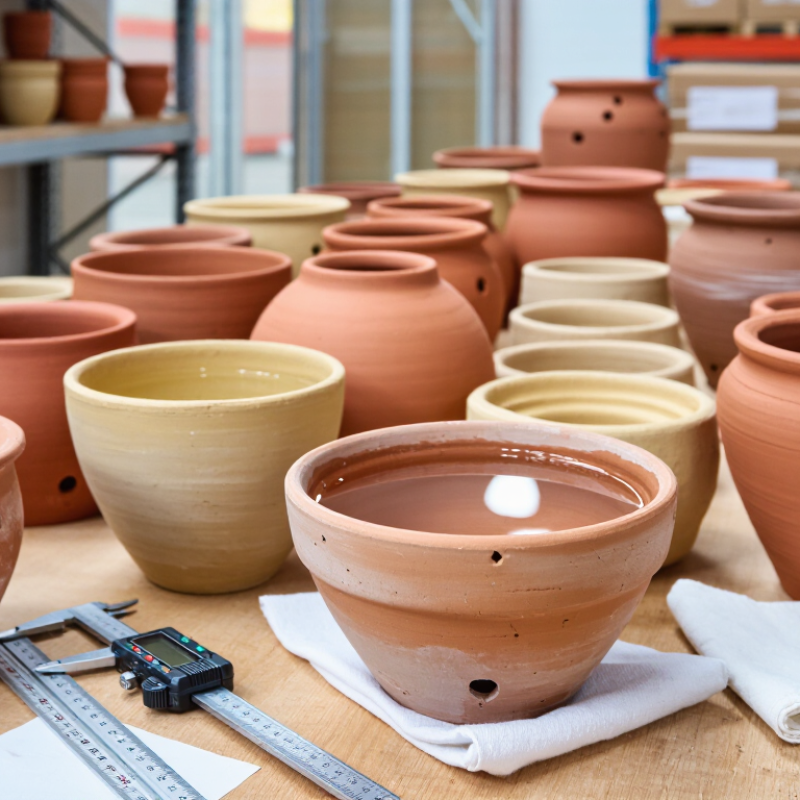
Earthen pots vary by clay, firing temperature, shape, and surface treatment. Red-clay pots are porous and retain gentle heat during cooking. Terracotta pots suit serving, plant cultivation, and dry storage. Darker clay pots often provide stronger walls, but color alone proves little. Glazed earthenware resists moisture better and supports easier cleaning. However, glaze quality must be verified for food-contact use. During global sourcing, buyers should request clay composition, firing details, dimensions, weight, and sample photographs.
A cooking pot needs even walls and a stable base. A planter needs drainage holes and consistent thickness. Decorative vessels may accept small color changes, while hospitality buyers usually require tighter visual standards. Inspect samples after transport, not only at the workshop. Cracks can appear after temperature shifts. My own sampling experience suggests that one approved piece is never enough. Batch variation remains a practical risk, especially with handmade production.
Tips: Compare three to five samples from different batches. Check rim smoothness, odor, wall thickness, and water absorption. Ask suppliers for packaging tests and export documents. Confirm whether the pot fits your destination market’s safety requirements. Avoid choosing by appearance alone. A beautiful pot may still leak, chip, or arrive broken. Keep a written quality checklist, even when the order feels small.
When I audit earthen pots for global sourcing, I start with the clay body, not the decoration. A consistent body feels dense, fine, and free from sharp grit. Check ten pieces from different cartons. Look for hairline cracks around the rim, uneven walls, pinholes, and pale fracture lines. These details often reveal poor mixing or uneven drying. US EPA’s AP-42 report places ceramic firing commonly between 1,000°C and 1,250°C, but firing temperature alone does not prove quality.
Water absorption deserves careful testing. ASTM C373-18 provides a recognized method for measuring absorption and apparent porosity. Soak sample pots for 24 hours, then compare their dry and wet weights. Large differences suggest inconsistent clay preparation or firing. ISO 10545-3 uses 0.5% absorption as a dense ceramic benchmark, but ordinary earthenware is usually more porous. Do not demand porcelain-like figures from an earthen pot.
Craftsmanship affects durability during shipping and daily use. Measure wall thickness at the rim, shoulder, and base. Record variations across twenty pieces. A two-millimeter difference can create weak heating points or unstable stacking. Check whether each base sits flat on a glass sheet. It should not rock. I also tap each pot lightly and listen for a clear ring. This is useful, but not scientific enough by itself. Glaze coverage should remain even, especially near handles and drainage holes. Some rustic irregularity is acceptable. Structural weakness is not.
Recommended evaluation priorities for assessing clay quality, craftsmanship, durability, and export readiness.
This practical sourcing scorecard gives the greatest emphasis to clay quality because clay composition, plasticity, and impurity control directly influence cracking, porosity, and firing performance. Craftsmanship covers wall thickness, rim accuracy, surface finish, and shape consistency. Durability includes firing consistency, water absorption, thermal-shock resistance, and resistance to handling damage. Compliance and packaging help reduce export risks during transport and customs inspection.
Choosing earthen pots for global markets requires more than selecting attractive shapes. Size should match local cooking habits, household space, and shipping limits. A 1.5-liter pot may suit small households, while larger families often need three liters or more. Measure the inner capacity, wall thickness, rim width, and base diameter. These details affect usability and freight calculations. A beautiful sample can still fail if it feels too heavy in daily use.
Tips: Ask suppliers for product drawings, weight tolerances, moisture resistance data, and firing details. Request samples in several sizes. Test them with common recipes, not only water. Check whether lids fit firmly and handles remain comfortable after heating. Confirm carton protection before approving bulk production.
Design preferences vary widely. Some markets prefer rough, natural surfaces with visible clay texture. Others expect smooth finishes, neutral colors, or simple modern profiles. Vent holes, pouring lips, stackable shapes, and heat-resistant handles can add practical value. Avoid adding features without evidence of demand. Extra decoration may increase breakage and costs. I have learned that “more functional” does not always mean “more desirable.”
Buyers may also judge consistency, so inspect ten or more samples instead of one. Record cracks, uneven glazing, odor, and dimensional differences. Small variations are normal, but unclear limits create avoidable disputes. Test carefully.
How to Choose Earthen Pots for Global Sourcing?
A reliable supplier should show clear standards for clay, glaze, firing, and packing. Ask for recent test reports covering lead, cadmium, moisture absorption, and thermal resistance. These records should match the actual production site, not just a trading office. Request production samples from different kiln batches. Small color changes are normal. Cracks are not. Check wall thickness with calipers, especially around the rim and drainage hole. A professional supplier will explain acceptable tolerances in writing.
Customization needs more than a digital drawing. Confirm the clay body, surface finish, logo method, dimensions, and packaging structure before approving a sample. Ask whether the design requires a new mold or simple tooling changes. Mold charges, minimum order quantities, and sample lead times can change the project cost sharply. I have found that one approved sample can hide problems. Test several units from a pilot batch instead. Handmade variation may add character, but uneven bases can create costly returns.
Production capacity should be verified on the factory floor. Review kiln size, firing schedules, worker numbers, quality checkpoints, and monthly output. Ask how many orders are already booked during peak seasons. A supplier promising unlimited capacity deserves careful questioning. Check whether backup kilns, trained replacements, and secure raw material storage exist. Also inspect export packaging through a drop test. A beautiful pot is useless if it arrives broken. Keep communication records, inspection criteria, and corrective actions together. Some suppliers may resist these details, and that resistance itself is useful information.
How to Choose Earthen Pots for Global Sourcing?
Export compliance should begin with the pot’s intended use. Decorative earthen pots and food-contact cookware may follow different safety requirements. Buyers should confirm material composition, glaze content, labeling, origin, and the correct customs classification. Lead and cadmium testing may be necessary for glazed cooking vessels. Wooden pallets or crates usually require ISPM 15 treatment and marking. Requirements differ by destination. Assumptions create delays.
Packaging directly affects landed cost and delivery risk. Use double-wall cartons, molded-pulp separators, and at least two centimeters of protective clearance. Each pot should be wrapped separately, not stacked against another rim. Moisture-resistant liners help during humid sea transport. ISTA drop-testing methods can expose weak corners before shipment, although laboratory results never perfectly match rough handling. UNCTAD reports that over 80% of global merchandise trade by volume moves by sea, making container vibration and port congestion important concerns. The World Bank’s Logistics Performance Index 2023 evaluates customs, infrastructure, shipment quality, and timeliness; these factors should influence route selection.
Request a cost sheet covering production, testing, packaging, duties, freight, insurance, and expected breakage. A low unit price can become expensive after repacking or claims. Keep a realistic damage allowance. Perhaps 2% is enough; perhaps not. Pilot shipments reveal more than spreadsheets. Photograph carton loading, record carton weights, and inspect random pots on arrival. This evidence supports supplier reviews and future negotiations.
| Category | Evaluation Dimension | Practical Benchmark or Requirement | Sourcing Implication | Risk Level |
|---|---|---|---|---|
| Product Classification | Indicative HS classification | Unglazed or glazed earthenware kitchen pots are commonly assessed under HS heading 6912.00 for ceramic tableware, kitchenware, other household articles and toilet articles, excluding porcelain or china. | Confirm the final tariff subheading with the customs authority or licensed customs broker in both the exporting and importing countries before shipment. | Medium |
| Product Classification | Material composition | Typical earthenware is made from fired clay and is generally fired at a lower temperature than stoneware or porcelain. Exact composition and firing temperature vary by supplier. | Request a material specification, firing-temperature record and representative sample to avoid incorrect tariff treatment or performance expectations. | Medium |
| Export Regulations | Commercial export documents | Common documents include a commercial invoice, packing list, transport document, export declaration where required, and certificate of origin when preferential tariff treatment is claimed. | Ensure that product description, quantity, net weight, gross weight, customs value and country of origin are consistent across all documents. | Medium |
| Export Regulations | Food-contact compliance | For pots intended for cooking, serving or food storage, the importing market may require compliance with food-contact-material rules, including limits for lead and cadmium migration from ceramic surfaces. | Obtain a food-contact declaration and accredited laboratory test report for the finished product, including glaze, pigment and decoration. | High |
| Export Regulations | Lead and cadmium migration testing | Testing should be performed on the finished article using the relevant destination-market method. Results must remain below the applicable legal limits for the intended food-contact use. | Do not rely only on raw-material certificates because firing conditions and glaze formulation can change migration results. | High |
| Export Regulations | Product labeling | Labels may need country of origin, importer or responsible-party information, product material, capacity, care instructions, temperature limitations and food-contact-use information. | Prepare destination-specific artwork and verify language, measurement units and mandatory symbols before mass production. | Medium |
| Export Regulations | Wood packaging materials | Solid wood pallets, crates and dunnage used in international trade commonly need treatment and marking under ISPM 15 requirements. | Use compliant pallets or non-wood packaging and retain treatment documentation where required by the destination country. | Medium |
| Quality Specification | Dimensional tolerance | A practical mass-production tolerance for handmade or semi-handmade earthen pots is often about ±3% to ±5% for diameter and height, subject to the approved sample. | Define tolerance by product size and function; tighter tolerances may increase labor, inspection and rejection costs. | Medium |
| Quality Specification | Cracks, warpage and glaze defects | Visible cracks, unstable bases, sharp chips and glaze flaking should normally be classified as critical or major defects for food-use products. | Use an approved defect standard with reference photos and conduct pre-shipment inspection before container loading. | High |
| Quality Specification | Thermal-shock performance | Earthenware may be vulnerable to thermal shock. A pot suitable for oven, stovetop or open-flame use must be tested for the specific temperature transition stated in the instructions. | Never assume that a decorative or food-safe pot is suitable for direct heat. Match the test protocol to the intended application. | High |
| Packaging Methods | Individual protection | Use a fitted inner box, molded pulp, honeycomb paper or equivalent cushioning that prevents contact between the pot, lid and accessories. | Packaging should restrain movement while avoiding concentrated pressure on rims, handles and thin walls. | Medium |
| Packaging Methods | Carton configuration | Double-wall corrugated cartons are commonly preferred for export shipments. Heavy products should be packed in low, stable layers with adequate edge protection. | Confirm carton compression strength, gross weight and stacking pattern through a packing trial before shipment. | Medium |
| Packaging Methods | Drop and vibration testing | Packaging validation should simulate handling shocks, vibration and stacking. ASTM D4169 or ISTA-based procedures may be selected according to the distribution route. | Test the final production packaging, not only a prototype, because small changes in inserts or carton dimensions can affect breakage rates. | High |
| Packaging Methods | Container loading | Use slip sheets, corner protection and load bracing where necessary. Avoid empty spaces that allow cartons to shift during ocean transport. | Photograph the loading condition and record carton counts by pallet or container position for claims and traceability. | Medium |
| Cost Structure | Indicative product cost | For standard earthen pots in medium-volume production, an indicative factory price may range from approximately USD 3 to USD 18 per piece, depending on size, wall thickness, finish, lid and workmanship. | Compare quotations using the same specification, packaging level, testing scope, order quantity and Incoterm. | Medium |
| Cost Structure | Export packaging cost | Protective export packaging may add approximately USD 0.40 to USD 2.50 per piece for common small-to-medium pots; larger or highly fragile items can cost more. | Evaluate packaging cost against expected breakage. The lowest packaging price may create a higher total landed cost. | Medium |
| Cost Structure | Testing and compliance cost | Basic material or food-contact testing can range from several hundred to more than one thousand US dollars per test package, depending on the laboratory, destination market and number of components. | Budget separately for initial qualification, periodic verification and retesting after changes to clay, glaze, pigment or firing conditions. | Medium |
| Cost Structure | Freight and landed-cost factors | Landed cost includes product price, export packing, inland transport, terminal handling, ocean or air freight, insurance, customs duty, import tax, brokerage and domestic delivery. | Request a landed-cost model based on carton dimensions, gross weight, shipment volume, destination port and agreed Incoterm rather than comparing unit prices only. | High |
| Delivery Risks | Ocean-transit lead time | A typical international ocean shipment may require approximately 25 to 60 days from cargo readiness to final delivery, depending on route, transshipment, port congestion and customs clearance. | Build schedule buffers for peak seasons, port disruption, inspections and inland delivery; do not plan solely from the nominal sailing time. | High |
| Delivery Risks | Production lead time | Standard orders may require approximately 30 to 75 days after specification approval. Handmade, custom-molded or heavily decorated products may require longer. | Separate mold development, sample approval, raw-material preparation, production, curing, firing, inspection and packing in the purchase schedule. | Medium |
| Delivery Risks | Breakage allowance | Fragile ceramic cargo should be monitored against a contractually agreed damage threshold. A practical target is to keep transit breakage below 1% through tested packaging and controlled handling. | Define inspection evidence, claim deadlines, replacement or credit procedures and responsibility under the selected Incoterm. | High |
| Delivery Risks | Moisture and odor exposure | Earthenware can absorb moisture if porous, while cartons can weaken in humid or wet conditions. Condensation may occur during ocean transport and container temperature changes. | Ensure products are fully dried before packing, use moisture-resistant carton treatment where appropriate and avoid sealing damp goods. | Medium |
| Delivery Risks | Customs hold or document discrepancy | Incorrect HS classification, inconsistent invoice data, missing certificates or unclear food-contact claims can delay customs release. | Conduct a document review before cargo cutoff and ensure the importer has all required compliance files before arrival. | High |
| Commercial Terms | Recommended Incoterm review | FCA, FOB, CIF, CPT, DAP and DDP allocate freight, insurance, customs and delivery responsibilities differently under Incoterms 2020. | Choose the term only after confirming who controls freight booking, import clearance, duty payment, unloading and final-mile delivery. | High |
| Commercial Terms | Payment and inspection milestone | A common risk-control structure is a deposit at order confirmation, balance after production inspection and release of shipping documents according to the contract. | Link payment milestones to objective evidence such as approved samples, test reports, quantity verification and packaging inspection. | Medium |
Red-clay pots retain gentle heat and remain porous. Terracotta suits serving, planting, and dry storage. Glazed pots resist moisture better.
No. Color alone proves little. Check clay composition, wall thickness, firing details, and sample photographs before buying.
Request dimensions, weight, clay details, firing information, packaging tests, and export documents. Keep every requirement in writing.
Check ten pieces from different cartons. Look for rim cracks, pinholes, sharp grit, uneven walls, and pale fracture lines.
Weigh a dry pot, soak it for 24 hours, then weigh it again. A large difference may show inconsistent preparation or firing.
It needs even walls and a stable base. Measure the rim, shoulder, and base. Weak heating points can cause failure.
Place it on a flat glass sheet. It should not rock. Small handmade irregularities may be acceptable, but instability is not.
Temperature changes can create cracks after production. Ask for packaging tests and inspect samples after transport, not only at the workshop.
Probably not. Compare three to five samples from different batches. Handmade production can vary more than expected.
Do not choose by appearance alone. A beautiful pot may leak, chip, smell unusual, or arrive broken. I may still miss hidden weaknesses, so repeated checks matter.
Choosing the right Earthen Pots for global sourcing requires a clear understanding of product types, intended uses, and target-market preferences. Buyers should assess clay quality, firing methods, surface finishing, craftsmanship, and durability to ensure the pots can withstand handling, climate changes, and regular use. Size, shape, color, drainage features, decorative details, and functional designs should also match customer expectations and local market requirements.
A reliable sourcing process includes reviewing supplier quality standards, customization capabilities, production capacity, and consistency across large orders. Buyers should also confirm export documentation, applicable product requirements, protective packaging, shipping costs, lead times, and delivery risks before placing an order. Careful testing, sample approval, and clear communication about specifications can help reduce breakage, delays, and unexpected expenses. By balancing design appeal, performance, supplier reliability, and logistics planning, businesses can select Earthen Pots that offer lasting value and support successful international distribution.

JIASHUN