Doing Housework is often treated as a personal discipline problem. It is more accurately a time, systems, and shared-responsibility issue. A clean kitchen does not happen by accident. It usually reflects visible planning, repeated habits, and someone remembering the small tasks behind the scenes.
The U.S. Bureau of Labor Statistics’ 2023 American Time Use Survey reported that women spent about 2.34 hours daily on household activities, compared with roughly 1.46 hours for men. These figures include cleaning, cooking, maintenance, and household management. The OECD also identifies unpaid work as a major factor in unequal time use and well-being. Data varies by country, household structure, and survey method. Still, the pattern is difficult to ignore.
Eve Rodsky, creator of the Fair Play method, explains, “A task is not just the doing. It’s the conception and the planning.” That distinction changes how we approach Doing Housework. Taking out the rubbish is one action. Noticing the full bin, buying replacement bags, and remembering collection day are separate mental demands.
This guide focuses on practical improvement, not spotless perfection. Use short routines. Store cleaning supplies near the mess. Divide ownership clearly. Review what fails.
Some systems will fail.
That is useful information. A forgotten laundry load may reveal an unrealistic schedule, not a lazy person. Better housework comes from adjusting the system, reducing friction, and sharing responsibility honestly. It also requires compassion, because homes are lived in, not displayed.
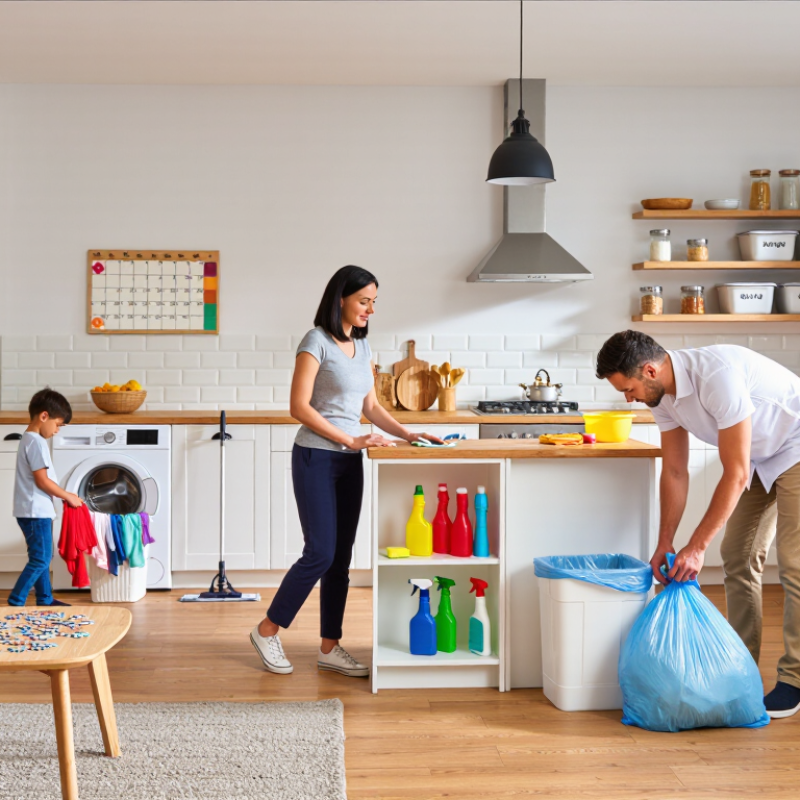
How to Get Better at Doing Housework?
Understanding the Core Skills of Effective Housework
Effective housework depends on a few learnable skills: noticing what needs attention, choosing a sensible order, and using tools safely. Start with one small area, such as the kitchen counter. Clear crumbs, wipe the surface, and return items to their usual places. This creates a visible result without turning the task into an exhausting project. A timer can help, but stop when your planned session ends.
Consistency matters more than perfection. Dust tends to collect on shelves and window ledges, while greasy splashes need a suitable cleaner and time to loosen. Read product directions, ventilate the room, and avoid mixing cleaning products. I still sometimes clean the same spot twice because I rush. Slowing down helps me notice what is actually dirty. It takes practice.
Tips: Keep a small caddy with basic supplies. Work from higher surfaces down, so dust does not land on freshly cleaned areas. Pair one routine task with a regular cue, like wiping the sink after brushing your teeth. If a chore feels too big, divide it into steps: gather laundry, start a load, then fold it later. These habits make housework more manageable.
| Core Skill | Practical Method | Observable Standard | Suggested Practice | Safety Reminder |
|---|---|---|---|---|
| Planning and prioritizing | List the tasks, then handle urgent hygiene needs and frequently used areas first. | The next task is clear, and essential work is completed before optional detail work. | Spend 5 minutes making a short task list before each cleaning session. | Keep walkways and exits clear while organizing. |
| Breaking tasks into steps | Turn a broad task such as “clean the kitchen” into steps: clear surfaces, wash dishes, wipe counters, and sweep the floor. | Each step is small enough to start without needing to plan the whole job again. | Choose 3–5 steps for one room and check them off as you go. | Put sharp utensils away safely before wiping or washing. |
| Choosing and using tools | Select a suitable cloth, brush, vacuum, or mop for the surface and type of dirt. | The tool reaches the area effectively without scratching or soaking the surface. | Practice matching common tools to the surfaces in one room. | Check care instructions for delicate surfaces and unplug electrical equipment before cleaning it. |
| Cleaning sequence | Work from higher surfaces to lower ones, and finish with the floor so falling dust can be collected last. | Previously cleaned areas are not repeatedly dirtied by later steps. | Use the same top-to-bottom sequence in one room each time. | Use a stable step stool when needed; do not climb on chairs or counters. |
| Laundry care | Sort items by care label and washing needs, then measure detergent according to its directions and the load. | Items are washed using appropriate care settings and are fully dry before storage. | Complete one small load from sorting through putting away. | Keep laundry products away from children and pets, and never mix cleaning chemicals. |
| Kitchen hygiene | Clean food-contact surfaces and utensils after use; separate raw-food preparation from ready-to-eat foods. | Surfaces are visibly clean, and utensils used with raw foods are washed before reuse. | Reset one work surface after each food-preparation session. | Wash hands and use separate or thoroughly cleaned utensils to reduce cross-contamination. |
| Consistency and routines | Attach short tasks to regular moments, such as putting items away after use or wiping a counter after meals. | Small amounts of work are completed regularly rather than left to accumulate. | Choose one repeatable 10-minute reset and use it on most days. | Adjust the pace and workload to your energy and physical ability. |
| Review and improvement | Notice which steps took longer than expected and change the order, tools, or routine next time. | The routine becomes easier to follow without sacrificing cleanliness or safety. | After a task, note one improvement to try during the next session. | Stop if a product causes irritation, and follow its label for safe use and ventilation. |
Note: Practice durations are flexible suggestions, not fixed requirements. Follow product labels and the care instructions for household items.
Check the kitchen after dinner, the bathroom sink in the morning, and the entryway where shoes collect. These spots show what needs attention.
Choose one clear task with a time limit, such as wiping counters for ten minutes. Small goals are easier to repeat.
Handle one basket at a time and decide where each item will go. I sometimes underestimate folding time, so a smaller load may work better.
Keep a washable cloth, a narrow brush, gloves, a bucket, and a suitable vacuum attachment nearby. Keep it simple.
Use separate cloths for kitchens and bathrooms. Rinse tools after use, and replace worn sponges regularly.
Clean high surfaces first and floors last. That way, falling dust will not settle on finished floors.
Let warm, soapy water sit briefly before wiping. Hard scrubbing may damage some finishes.
Read its label for dilution and ventilation instructions. Test it on a hidden spot, and never mix cleaning products. I still forget to test sometimes.
Doing Housework becomes easier and more effective when you treat it as a set of learnable skills rather than a chore to tackle all at once. Start by looking at your home, identifying the areas that need the most attention, and setting realistic cleaning goals. Choosing suitable tools and supplies for each task can help you work safely and avoid unnecessary effort. Simple methods, such as cleaning from top to bottom and putting items back after use, make each session more manageable.
Build a routine that balances small daily tasks with deeper weekly cleaning. Keep supplies organized and tasks clearly defined so you spend less time deciding what to do and more time getting it done. With consistent practice, you can improve your pace, maintain a tidier home, and adjust your routine as your needs change.

 JIASHUN