 JIASHUN

1. Melbourne's Architectural Landscape & Sanitaryware Demand
The urban landscape of Melbourne, Victoria, is undergoing a profound transformation driven by high-density vertical development, sustainable residential construction, and a strong preference for biophilic design. Within this competitive construction ecosystem, bathroom specifications have shifted from secondary utility spaces to central, experience-driven sanctuaries. Modern architects, developers, and commercial interior designers across Melbourne's CBD, Southbank, and Richmond precincts require sanitaryware and hardware that achieve a delicate balance of physical endurance, ecological compliance, and visual refinement.
Unlike standard residential fixtures, commercial bathroom accessories destined for the Melbourne market must withstand demanding usage profiles while contributing to the project’s overarching design language. This market is characterized by a strong demand for stoneware and high-durability ceramics that resist mechanical wear, chemical corrosion, and micro-crack propagation over time. Whether outfitting a luxury multi-family development in Collingwood or retrofitting an heritage-listed commercial office in Docklands, developers face the challenge of sourcing high-quality ceramic fittings that satisfy both localized structural codes and modern aesthetic trends.
2. Localized Compliance & Regulatory Standards in Victoria
Navigating the regulatory landscape of Australian construction is critical for international supply chain partners and local distributors. In Victoria, all sanitary fittings and liquid-dispensing accessories integrated into building structures must comply with specific water-use efficiency standards and material health metrics. Sourcing products that align with these regional parameters prevents costly installation delays and legal non-compliance during final occupancy inspections.
- AS 3500 (Australian Plumbing and Drainage Standard): Accessories integrated with water supply lines must comply with plumbing design layouts that prevent backflow and cross-contamination. Sinks and integrated ceramic vessels must feature precise drainage tolerances.
- WELS Scheme (Water Efficiency Labelling and Standards): Sourced items that regulate flow rate—such as ceramic basins with built-in mixers—must achieve high WELS star ratings (minimum 4-star to 5-star for typical commercial specifications in Melbourne) to assist developers in securing green building credentials.
- NCC (National Construction Code) & Green Star Rating: Low-VOC, non-toxic glazing formulations are vital for premium commercial builds in Melbourne striving for high-tier Green Star certifications. The elimination of heavy metals from glazes is a strict requirement for sustainable supply lines.
3. Corporate Profile: Fujian Jiashun Arts & Crafts Corp., Ltd.
For over two decades, Fujian Jiashun Arts & Crafts Corp., Ltd. has established itself as an industry leader in daily ceramic production, arts and crafts porcelain fabrication, and specialized sanitaryware accessories. Strategically situated in Dehua, the world-renowned ceramic capital of China, the corporation leverages Dehua's historic craftsmanship and geological access to premium kaolin clay to supply high-end products to over 20 countries and regions worldwide. Sourcing from Dehua ensures that every batch of ceramic bathroom accessories benefits from high-temperature firing techniques and superior structural integrity.
Founded on January 17, 2005, the enterprise has grown to employ over 200 dedicated professionals, including a core team of over 40 office, workshop management, and technical engineers. Operating with an annual export value exceeding $5 million USD, the company maintains a state-of-the-art facility featuring modern administrative offices, a multi-functional sample exhibition showroom, and clean, standardized manufacturing workshops. With ISO9001 and ISO14001 certifications, Fujian Jiashun ensures every phase of production adheres to global quality and environmental standards.
4. Industry 4.0: Supply Chain Resilience & Smart Ceramics
To serve the fast-paced and demanding construction cycles of the Melbourne market, Fujian Jiashun has transformed its manufacturing footprint with advanced automation. By implementing Industry 4.0 practices, the company has mitigated traditional manufacturing variables, ensuring consistent physical dimensions and finish uniformity across bulk shipments. The integration of technology protects projects against typical supply chain delays and product inconsistencies.
The factory's technical infrastructure includes two modern, intelligent, electrically controlled rotary kilns and two automated slip-casting/grouting production lines. These automated systems maintain uniform clay density and moisture profiles during the greenware stage, minimizing structural distortion during the firing process. Additionally, the adoption of an 8S management methodology and strict quality standards ensures that every batch meets rigorous dimensional tolerances before packaging and shipping.
| Production Technology | Traditional Ceramics | Jiashun Industry 4.0 Advantage | Benefit to Melbourne Procurement |
|---|---|---|---|
| Firing Control | Manual monitoring, variable temperature profiles | Dual intelligent electric rotary kilns with real-time temperature telemetry | Zero thermal warping, consistent glaze color across high-volume production |
| Slip-Casting / Grouting | Hand-poured molds with variable wall thickness | Dual automated slip-casting production lines | Consistent wall thickness and product weight, high mechanical durability |
| Material Recycling | High raw material waste, discarded greenware | Closed-loop waste tile and clay body recycling systems | Supports green project specifications and contributes to carbon reduction targets |
5. Global Procurement Dynamics & Strategic Sourcing
Global procurement specialists and developers operating in Melbourne face challenging project timelines and strict budgets. Sourcing directly from Dehua-based manufacturers offers a reliable way to optimize procurement budgets without compromising on raw material quality or design detail. The direct connection to the source eliminates markups from intermediaries, enabling developers to allocate more resources toward custom glaze finishes and proprietary geometries.
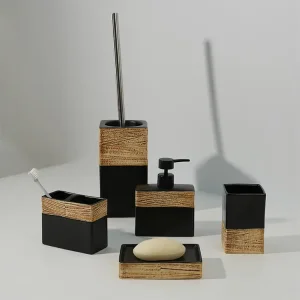
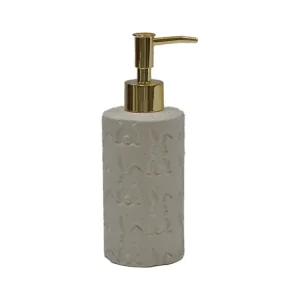
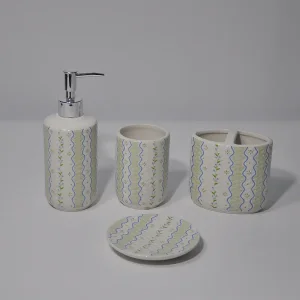
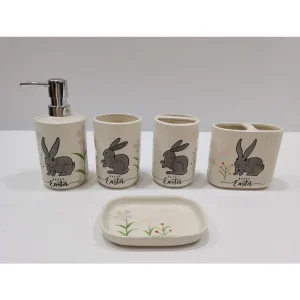
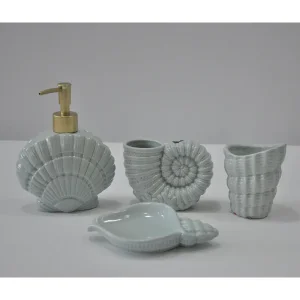
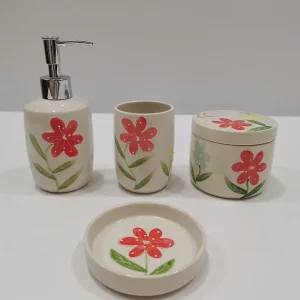
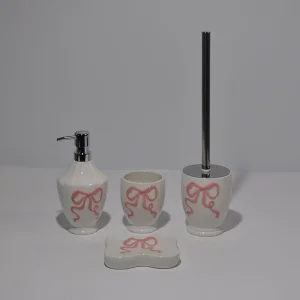
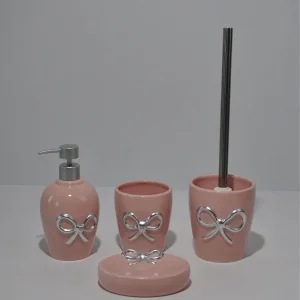
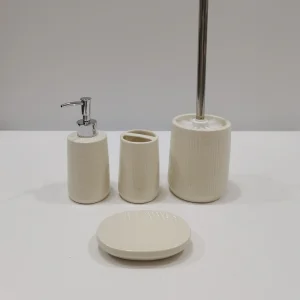
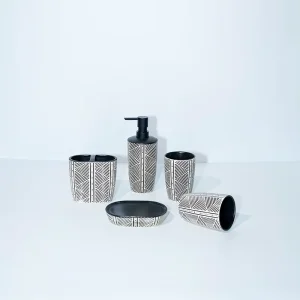
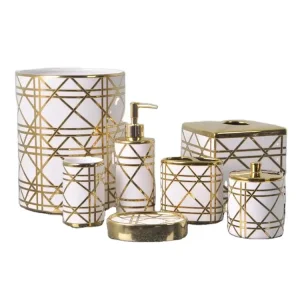
A key factor in selecting a supply chain partner is their capacity to offer agile OEM and ODM services. In high-density projects, standard off-the-shelf catalog products may fail to align with the architect's specific vision. By partnering with a factory that features an in-house design and engineering team, Melbourne developers can customize everything from soap dispensers to countertop organizers, ensuring the design matches the project's unique finishes, whether that means a custom-textured stone-look finish or a gold-trimmed ceramic motif.
Automated production lines drastically reduce manufacturing cycles. Orders are dispatched on time, aligning perfectly with construction timeline milestones.
Strict adherence to ISO9001 and ISO14001, combined with internal quality control protocols, ensures defect rates remain below standard thresholds.
Waste recovery initiatives, including the recycling of discarded materials, keep environmental impact to a minimum, meeting modern green requirements.
6. Technology Roadmap & Future Glazing Innovations
Fujian Jiashun's forward-looking technology roadmap centers on the integration of material science and functional design. Over the next five years, the corporation is focusing development efforts on two main areas: smart sanitaryware surfaces and advanced composite glazing. By investing in these fields, the factory provides clients with products that deliver long-term value, resisting wear and maintaining their appearance over years of daily use.
Of particular note is the development of self-cleaning, photocatalytic glazes. When exposed to light, these advanced glazes break down organic compounds at the molecular level, preventing bacteria and mold growth on high-touch accessories like soap dispensers and toothbrush holders. Additionally, the company is refining its double-firing glaze techniques to produce highly durable, textured stone and woodgrain finishes. This offers developers the premium look of natural materials with the durability and ease of cleaning inherent to high-temperature ceramics.